In participating in the BEMM129 module, I have developed not only a greater understanding of digital business models, but confidence and curiosity.
New Confidence and Thirst for Knowledge
I had previously been apprehensive to share my thoughts and opinions for debate on an online community. However, through my necessary participation in module debates and the wider community on a MOOC titled “Building Your Career in Tomorrow’s Workplace”, I quickly gained confidence coming to value outside questioning, encouraging me to re-evaluate my views and challenge those of others. As such, in hindsight I feel these two-sided interactions were highly effective and satisfying, as they motivated me to broaden my knowledge, and further research topics discussed in module discussions, classmate’s blogposts and on MOOC, with the last I feel was particularly pertinent as a soon to be graduate.
The current COVID-19 outbreak has caused unprecedented changes, from forcing circumstances of remote working to the rapid digitalisation of services to survive. As such, I am interested to discover if my colleagues’ opinions have since changed. As reflecting upon my below comment on a MOOC topic, I believe my opinions are supported by the role of the police during this pandemic. Evidently, heightened police presence has become necessary to enforce government ‘lockdowns’, supporting my view that their roles are not replaceable by technology. However with Italian police utilising drones for street-patrols to ensure civilian compliance, how technology can supplement human limitations is also demonstrated.
Additionally, reading Mengmeng’s blogpost has prompted me to consider the limitations of digitalisation within services. As seen below I drew attention to the inability of booking sites to deal with cancellations, highly relevant given the complex consequences to travelling plans created by this pandemic.
Further, looking to Nico’s blogpost I also find among my social circles that demand for online retail has notably increased during ‘lockdown’. As such, I have since altered my opinion that appearing ‘accessible’ is detrimental to luxury brands, instead deliberating, convenience may instead heighten their brand image.
Notably, when researching and applying for future job roles, I will utilise the knowledge learnt from this module, to consider how these roles or industries will be impacted by digitalisation, for example the role of marketer in Nicolette’s blogpost and further by the transition towards a circular economy, and how in my professional capacity I can encourage this transition.
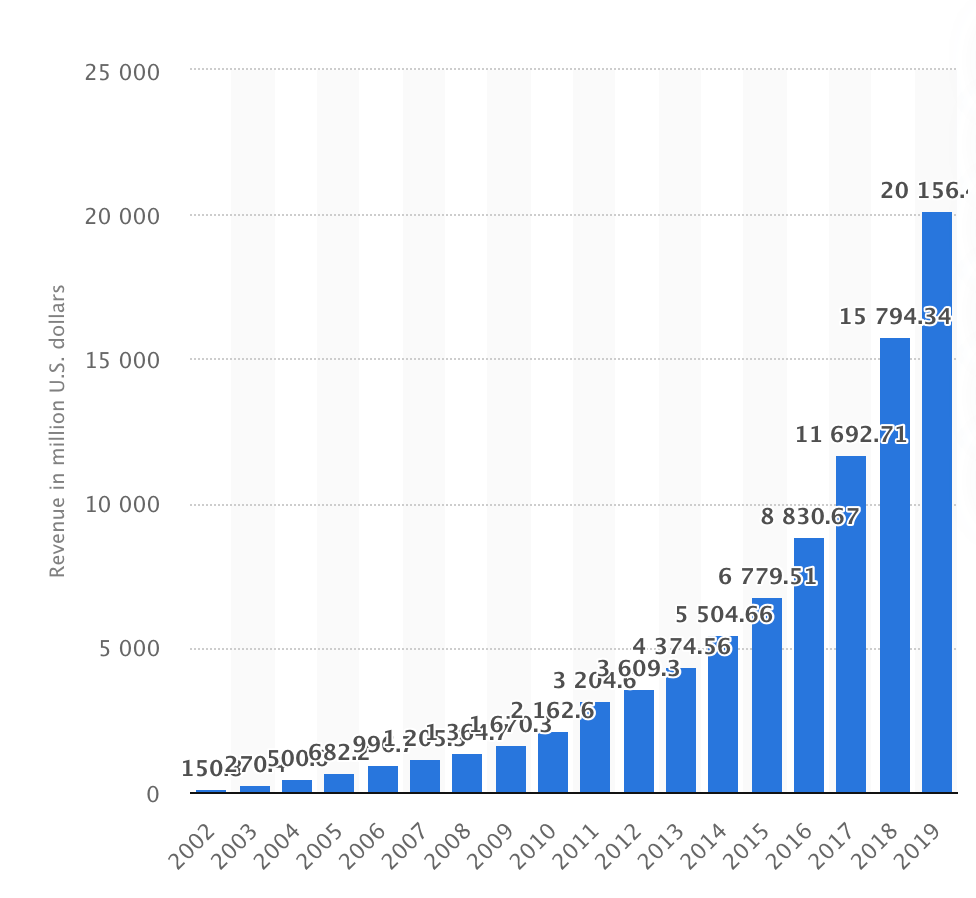
Advances in digital technologies and connectivity offered new opportunities for business model innovation (Bharadwaj, 2013). Netflix Inc. is one company, which through its’ adoption of a digital business model, pioneered a new video streaming on demand (VSOD) service. Netflix, now a household name, boasts an impressive 167 million subscribers worldwide (Statista, 2020). Regarded as the best subscription streaming service, it charges a monthly flat-rate subscription fee for unlimited access to its’ an online entertainment hub, offering simultaneous on-demand streaming for up to four individuals of a selection of television box sets, films and original content to a device of choice (Honorof, 2020).
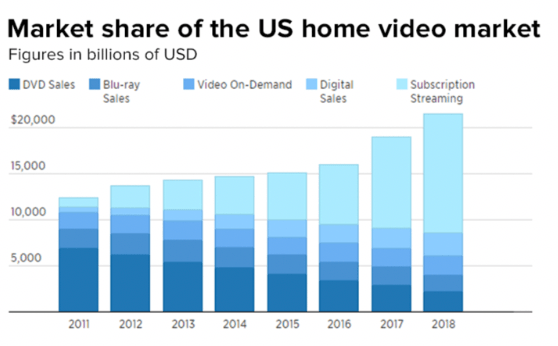
Netflix began in 1999 as a DVD-by-mail subscription service in the United States (U.S.), aiming to disrupt movie-rental services by overcoming inconvenient physical store returns and late fees. The innovative product-as-service worked within a sharing economy, replacing the need to own tangible DVDs and moving away from the take-make-dispose norm of consumerism (Rood & Kishna, 2019). Importantly, the 2000’s saw the rise of digital cable, where broadcasters offered premium channel subscriptions for movies and ‘on demand’ digital DVDs via subscription (Sherman, 2019). Most significantly, the rise of the internet birthing the SVOD industry drastically impacted the popularity of DVD use and purchase (CNCB, 2019). Therefore, although the company had achieved growth with 13.8 million DVD subscribers by the fourth quarter of 2011, had Netflix failed to seize the opportunity to offer a digitalised service, the company’s popularity would have diminished.
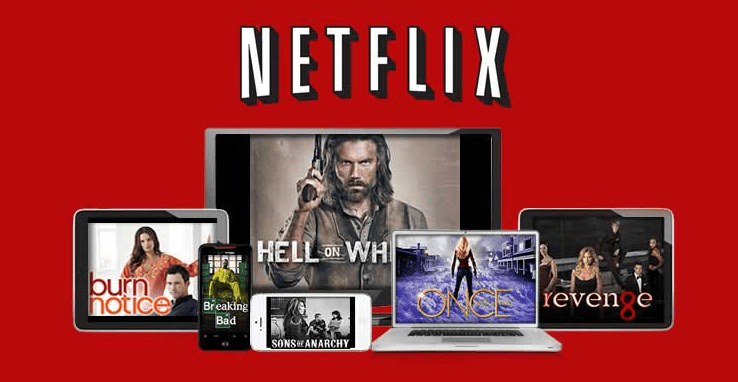
Netflix’s digitalisation in 2007 gave the company control of its value chain, through licensing directly with studios and suffering no additional costs per customer, they created large profits (RedSpider, n.d.). However, their achievement was reliant on the receptiveness of consumers and their preference for convenience which VSOD allowed – bypassing the linear schedules governing TV. Further, technology has allowed the development of their entertainment app, enabling Netflix to be enjoyed on multiple devices simultaneously – offering the ultimate ‘on demand’ experience, with specific device applications even allowing content downloading to enjoy without internet (Netflix, 2020).
An image depicting all the devices from which Netflix can be watched soured from http://netflix-abroad.com/
Market Development
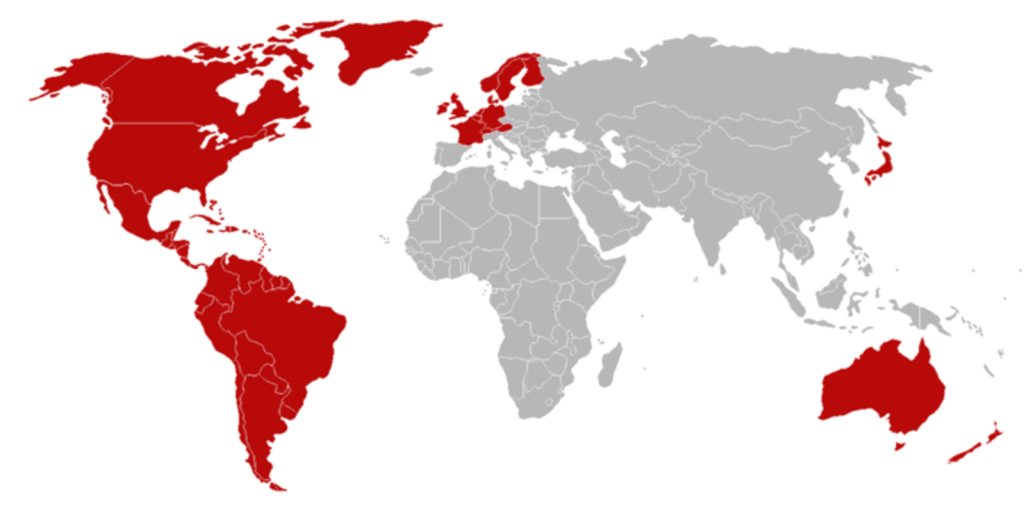
Significantly, digitalisation allowed Netflix to begin a hugely successful and rapid internationalisation strategy in 2011. Without such, their exponential growth would have been unlikely. They expanded into 190 countries worldwide in just seven years, gaining approximately 70 million users outside of the U.S. and upwardly trending (EMarketer, 2018). Entering these new markets was paramount to their growing success in the VSOD industry, with only China, North Korea, Syria and Crimea remaining unconquered, though government restrictions are to blame here (Netflix, n.d.). Importantly, utilising their digital business model, the company was even able to overcome India’s technological challenges (lack of household televisions), by offering a $3.00 mobile-only plan. However, their partnership with Airtel for better market access and tailored regional content aided their ample success with a 700% growth for the fiscal year 2018-2019 (The Economic Times, 2019).
However, with the VSOD industry becoming increasingly competitive due to a lack of patented technologies or regulations creating low barriers to entry (Vikash, 2019), and with the digital business models of competitors like Amazon Prime Video, showing only minor differences, and undertaking internationalisation also, the key differentiator between these services is the content they offer. As such, Netflix’s continued success is somewhat attributed to its’ early mover advantage (Lieberman & Montgomery, 1988) which not only allowed the company to gain a large percentage of the market, able to leverage its user base to gain the best licensing deals from studios.
Thus, although 63% of their content is licensed, with increasing prices due to competition and piracy as one of the largest threats to SVOD revenue (Forbes, 2015), it was Netflix’s creation of original content which offered a game-changing strategy, accounting for 37% of Netflix streaming in October 2018 (Sprangler, 2018). It attracted big industry names – offering high pay and according to Shonda Rhimes – creator of hit shows ‘Grey’s Anatomy’ and ‘How to get away with Murder’ who left Disney for Netflix:
“I love the creative freedom there. There are no restrictions.”
Shonda Rhimes (Vox, 2017).
This decision and the company’s initial preference for series reboots and stars ‘past their prime’ for example in their creation of ‘Fuller House’, attracted new audiences and reduced licensing costs, consumer switching and piracy as a substitution (Aversa, Hervas-Drane, Evenou, 2019).
In conclusion, Netflix’s initial success can be attributed to its’ digital business model revolutionising ‘on demand’, as only 4.7% if its 57.4 million U.S. subscribers still utilise its’ DVD rental service (Statista, 2020). However, its continued success, though facilitated through digitalisation, is credited largely to its subsequent market development (internationalisation strategy) and product development (own-content creation strategy), which has allowed Netflix, despite its’ rising competition to remain the frontrunner in the VSOD industry.
Technology. What is the first digitally revolutionised industry association you make? Travel? Music? Retail? Though its’ transformation may not take president, technology has been powerfully disruptive within the fitness industry.
Personal training is an emerging occupation, projected to grow 13% (relative to the five percent average) from 2018 to 2028 (Bureau of Labor Statistics, 2019), and a top ten worldwide trend for 14 years (Thompson, 2019). Traditionally, the defined role of a personal trainer (PT) is limited to face-to-face interactions within a gym-setting, whereby clients are coached, educated and encouraged through predetermined exercises tailored to their fitness ability and goals (The Training Room, 2016). However, U.S. Senator Kamala D. Harris states, within our rapidly changing economy, it will be a necessity to foster and acquire new skills throughout a career (Harris, 2019). As such, the digital revolution, specifically the rise of Web 2.0, wearable gadgets and workout applications, has redefined the PT job-role. Now occupying both the physical and digital realm, their certifications and proficiencies have moved beyond those required for the ‘traditional’ job description – to include social media marketing and data tracking capabilities.
With PTs their own brand, typically self-employed or contracted with gyms, marketing has always been required to gain clients. However, social media, as now woven into the fabric of people’s daily fitness lives (Stevens, 2016), is found to be hugely significant in determining the success or failure within the fitness industry (Haemers, 2016).
“Fitness sells on emotion and sharing content on social media relies on eliciting an emotional response”
Jonathan Goodman, CEO of the Personal Trainer Development Centre in a Forbes’ interview with David Tao (Goodman, 2013).
Thus, PTs now require personal selling and digital skills. Tasked with creating online client portfolios, sharing inspirational content to create brand awareness, strengthen brand equity, and build and maintain relationships with current and future customers (Radclyffe-Thomas, 2016; Yan, 2011).
Further, PTs have become data analysts. Surging 330% between 2104 to 2017 (Flurry Analytics Survey, 2017), new fitness applications are constantly appearing in society today, and proliferating in popularity. For example, ‘Runtastic’ (Dellinger, 2016), saving data to the online cloud, is able via GPS to track pace, distance and speed and wearables like ‘Fitbit’ (Thompson, 2019) tracking an individual’s general activity, calories burnt and heart-rate. As such, PTs are using turnkey data aggregation platforms such as ‘ActiveOS’, incorporating application and wearables’ data, to gain access and insights into the 24/7 lifestyle and activity of their clients (ActiveOS, 2019). Therefore, the PT role has moved beyond limited in-person contact, offering remote support to keep their clients on track.
Importantly, many PTs have adapted their business model – digitalising their service by offer the same functions without their physical supervision. Instead creating and uploading or streaming instructional video demonstrations online, which are becoming increasingly more common and popular (Pete McCall, 2016) with the rise of YouTube fitness stars like Joe Wicks and Kayla Itsines a testament to this trend. They offer clients the epitome of convenience, now expected by the technology driven and on-demand culture (Fromm, 2019).
Significantly, the article ‘Artificial Intelligence’ (AI) on the Futurelearn MOOC ‘Building your Career in Tomorrow’s Workplace’ course, drew attention to its role in digitally transitioning business models. As the future for fitness is exciting, with AI fitness apps for weightlifting claiming the ability to correct form via machine learning, image recognition and motion-tracking through the selfie camera. Additionally, virtual reality (VR) PTs are a recurring theme, with the soon to be released application ‘GymFitty’ able to watch your workout, adjust your future bespoke workouts and offer interactive vocal encouragement.
Though, these examples demonstrate the forever looming threat of a ‘technology takeover’, Lloyd and Payne (2013) recognise by institutional standards, all gyms and PTs must be competent to guarantee clients do not harm themselves by undertaking inappropriate activities. Thus, while adaptive, technology is not yet insightful, and for weightlifting at least, for many non-professionals a PT still remains key. Consider, can a phone prevent you dropping a weight on yourself? Or pre-emptively correct your form to prevent injuries?
Importantly, for those lacking self-efficacy at the gym like myself, Maguire (2001) argues only the traditional PT ensures accountability, implicitly guaranteeing a workout completion. Further finding, a positive trainer-client rapport is central to a client’s long-term motivation and success. With motivation theory testifying instructor-connectedness and the encouragement-fuelled confidence offered by a tangible PT aids to internalise motivation (Eike Dehling, Dennis Reidsma, Job Zwiers, 2011).
So, essentially, it’s all in the name – ‘personal’, people still continue to crave the human emotional element and culpability factor which apps, streamed videos, VR and AI have yet to adequately achieve. Therefore, it seems technology offers only augmentation and alternatives, but not PT replacements – at least for now.
References
ActiveOS, (2019). The Wearables Data Platform Powering Health and Fitness Solutions. Retrieved February 10, 2020 from http://activeos.com/
Lloyd, C., & Payne, J. (2013). Changing job roles in the Norwegian and UK fitness industry: In search of national institutional effects. Work, Employment and Society, 27(1), 3–20. https://doi.org/10.1177/0950017012460325
Maguire, J. S. (2001). Fit and flexible: The fitness industry, personal trainers and emotional service labor. Sociology of Sport Journal, 18(4), 379–402. https://doi.org/10.1123/ssj.18.4.379
Radclyffe-Thomas, R. &. (2016). How Toms’ one day without shoes; campaign brings stakeholders together and co-creates value for the brand using instagram as a platform Journal of Fashion Marketing and Management. Journal of Fashion Marketing and Management HOW. Retrieved from http://ualresearchonline.arts.ac.uk/9768/1/Roncha_RadclyffeThomas_JFMM.PDF
Hi, my name is Claudia Annabella Stratford, I am 22 and currently studying for a Masters of Science in Marketing at the University of Exeter, having completed a Bachelor of Science in Psychology also at the University of Exeter.
Although these degrees seem different, I felt marketing was a natural progression for me as have always been interested in understanding consumer behaviour and how psychology influences many elements of marketing. I am also particularly interested in the effects of technology in business particularly within marketing.
In the coming weeks I will post blogs retaining to the themes and topics discussed within a module on my course: Digital Business Models.