Technology. What is the first digitally revolutionised industry association you make? Travel? Music? Retail? Though its’ transformation may not take president, technology has been powerfully disruptive within the fitness industry.
Personal training is an emerging occupation, projected to grow 13% (relative to the five percent average) from 2018 to 2028 (Bureau of Labor Statistics, 2019), and a top ten worldwide trend for 14 years (Thompson, 2019). Traditionally, the defined role of a personal trainer (PT) is limited to face-to-face interactions within a gym-setting, whereby clients are coached, educated and encouraged through predetermined exercises tailored to their fitness ability and goals (The Training Room, 2016). However, U.S. Senator Kamala D. Harris states, within our rapidly changing economy, it will be a necessity to foster and acquire new skills throughout a career (Harris, 2019). As such, the digital revolution, specifically the rise of Web 2.0, wearable gadgets and workout applications, has redefined the PT job-role. Now occupying both the physical and digital realm, their certifications and proficiencies have moved beyond those required for the ‘traditional’ job description – to include social media marketing and data tracking capabilities.
With PTs their own brand, typically self-employed or contracted with gyms, marketing has always been required to gain clients. However, social media, as now woven into the fabric of people’s daily fitness lives (Stevens, 2016), is found to be hugely significant in determining the success or failure within the fitness industry (Haemers, 2016).
“Fitness sells on emotion and sharing content on social media relies on eliciting an emotional response”
Jonathan Goodman, CEO of the Personal Trainer Development Centre in a Forbes’ interview with David Tao (Goodman, 2013).
Thus, PTs now require personal selling and digital skills. Tasked with creating online client portfolios, sharing inspirational content to create brand awareness, strengthen brand equity, and build and maintain relationships with current and future customers (Radclyffe-Thomas, 2016; Yan, 2011).

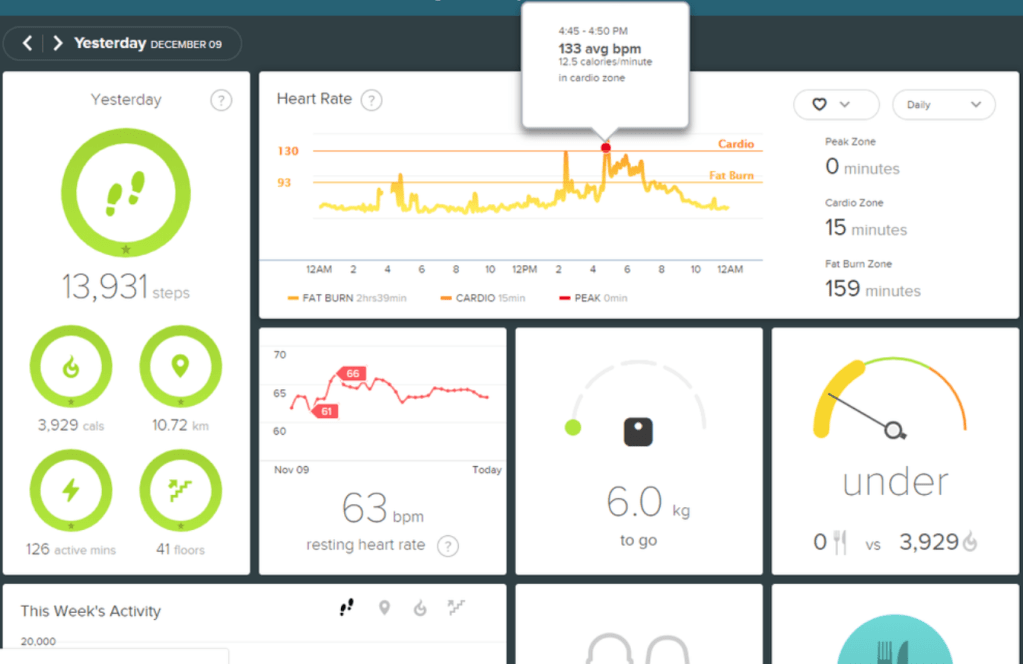
Further, PTs have become data analysts. Surging 330% between 2104 to 2017 (Flurry Analytics Survey, 2017), new fitness applications are constantly appearing in society today, and proliferating in popularity. For example, ‘Runtastic’ (Dellinger, 2016), saving data to the online cloud, is able via GPS to track pace, distance and speed and wearables like ‘Fitbit’ (Thompson, 2019) tracking an individual’s general activity, calories burnt and heart-rate. As such, PTs are using turnkey data aggregation platforms such as ‘ActiveOS’, incorporating application and wearables’ data, to gain access and insights into the 24/7 lifestyle and activity of their clients (ActiveOS, 2019). Therefore, the PT role has moved beyond limited in-person contact, offering remote support to keep their clients on track.
Importantly, many PTs have adapted their business model – digitalising their service by offer the same functions without their physical supervision. Instead creating and uploading or streaming instructional video demonstrations online, which are becoming increasingly more common and popular (Pete McCall, 2016) with the rise of YouTube fitness stars like Joe Wicks and Kayla Itsines a testament to this trend. They offer clients the epitome of convenience, now expected by the technology driven and on-demand culture (Fromm, 2019).
Significantly, the article ‘Artificial Intelligence’ (AI) on the Futurelearn MOOC ‘Building your Career in Tomorrow’s Workplace’ course, drew attention to its role in digitally transitioning business models. As the future for fitness is exciting, with AI fitness apps for weightlifting claiming the ability to correct form via machine learning, image recognition and motion-tracking through the selfie camera. Additionally, virtual reality (VR) PTs are a recurring theme, with the soon to be released application ‘GymFitty’ able to watch your workout, adjust your future bespoke workouts and offer interactive vocal encouragement.
Though, these examples demonstrate the forever looming threat of a ‘technology takeover’, Lloyd and Payne (2013) recognise by institutional standards, all gyms and PTs must be competent to guarantee clients do not harm themselves by undertaking inappropriate activities. Thus, while adaptive, technology is not yet insightful, and for weightlifting at least, for many non-professionals a PT still remains key. Consider, can a phone prevent you dropping a weight on yourself? Or pre-emptively correct your form to prevent injuries?
Importantly, for those lacking self-efficacy at the gym like myself, Maguire (2001) argues only the traditional PT ensures accountability, implicitly guaranteeing a workout completion. Further finding, a positive trainer-client rapport is central to a client’s long-term motivation and success. With motivation theory testifying instructor-connectedness and the encouragement-fuelled confidence offered by a tangible PT aids to internalise motivation (Eike Dehling, Dennis Reidsma, Job Zwiers, 2011).

So, essentially, it’s all in the name – ‘personal’, people still continue to crave the human emotional element and culpability factor which apps, streamed videos, VR and AI have yet to adequately achieve. Therefore, it seems technology offers only augmentation and alternatives, but not PT replacements – at least for now.
References
ActiveOS, (2019). The Wearables Data Platform Powering Health and Fitness Solutions. Retrieved February 10, 2020 from http://activeos.com/
Dellinger, A. (2016, 14 January). Runtastic 5.0 Review. Retrieved from DigitalTrends.com: http://www.digitaltrends.com/mobile/runtastic-5-0-review/
Eike Dehling, Dennis Reidsma, Job Zwiers, H. W. (2011). The Reactive Virtual Trainer. 80.
Flurry Analytics Survey (2017) as cited in NetImperative (2017) Health and Fitness app usage “grew 330% in just 3 years. Retrieved February 10, 2020 from http://www.netimperative.com/2017/09/health-fitness-app-usage-grew-330-just-3-years/
Fromm, J (2019). Marketing Convenience to the Modern Consumer. Retrieved February 10, 2020 from https://www.forbes.com/sites/jefffromm/2019/01/04/marketing-convenience-to-the-modern-consumer/#13f93b9b127f
Goodman, J. (2013, May 14). CEO of Personal Trainer Development Center. (D. Tao, Interviewer)
Haemers, I. (2016). Success story of a young fitness brand. Social media influence as an indicator of success in the fitness industry.
Harris, K. D., (2019). Harris Introduces 21st Century SKILLS Act to Invest in Workforce Training. Retrieved February 10, 2020 from https://www.harris.senate.gov/news/press-releases/harris-introduces-21st-century-skills-act-to-invest-in-workforce-training
Lloyd, C., & Payne, J. (2013). Changing job roles in the Norwegian and UK fitness industry: In search of national institutional effects. Work, Employment and Society, 27(1), 3–20. https://doi.org/10.1177/0950017012460325
Maguire, J. S. (2001). Fit and flexible: The fitness industry, personal trainers and emotional service labor. Sociology of Sport Journal, 18(4), 379–402. https://doi.org/10.1123/ssj.18.4.379
Radclyffe-Thomas, R. &. (2016). How Toms’ one day without shoes; campaign brings stakeholders together and co-creates value for the brand using instagram as a platform Journal of Fashion Marketing and Management. Journal of Fashion Marketing and Management HOW. Retrieved from http://ualresearchonline.arts.ac.uk/9768/1/Roncha_RadclyffeThomas_JFMM.PDF
Stevens, E. C. (2016, April 27). Social Media and Fitness: The Good, the Bad, and the Ugly. Retrieved from BreakingMuscle.com: http://breakingmuscle.com/sports-psychology/social-media-and-fitness- the-good-the-bad-and-the-ugly
The Training Room (2016). The Roles and Responsibilities of a Personal Trainer. Retrieved February 10, 2020 from https://www.thetrainingroom.com/blog/fitness/september-2016/roles-and-responsibilities-of-a-personal-trainer
Thompson, W. R. (2019). Worldwide Survey of Fitness Trends for 2020. ACSM’s Health and Fitness Journal, 23(6), 10–18. https://doi.org/10.1249/FIT.0000000000000526
Yan, J. (2011). Social media in branding: Fulfilling a need. Journal of Brand Management, 18(9), 688–696. https://doi.org/10.1057/bm.2011.19
 On Claud Nine
I thought this was a really interesting article and really points out how a very human business model is rapidly becoming digital.
What do you think about the sudden influx in personal trainers? Do you think its a bit of an ‘influencer bubble’ that people are jumping on for the lifestyle?
As you point out, people crave human connection, I really do feel like this is an important part of exercise. From my own experience, I don’t like going to the Gym on my own and have had the best session when with a PT. Do you think we are moving further from or closer to human interaction in PT sessions?
LikeLike
Hi Alexander, thank you! I believe the ease of a digital business model for PTs and ability for individuals to utilise their perhaps existing social media reach to gain business and yes to a certain degree image-focused ‘fame’ or recognition. Unfortunately, with a lack of regulations on PT accreditations on sites like YouTube and Instagram, people could potentially icause themselves injuries if following certain online workout videos or plans without a PT’s physical guidance.
I hope towards human contact, but i think the level to which people embrace these new technologies is completely individual and perhaps dependent upon money, gym experience and convenience.
LikeLike
This is a really exciting post to read because personally, I am new to the personal trainer concept. I mean, I have heard about it before, but I never tried to attend a personal training session. Other than they are charging a quite high hourly rate, for a person like me has no specific training need, I found the content on the internet already very useful. for example, you mentioned in the post, there are a lot of YouTube channels that provide various programs about how to train yourself for either losing weight, or build a better body shape.
And also, there is an APP is trending among younger users in China, named Keep ( https://www.gotokeep.com/ ), their slogan is “One stop for all your exercise needs”. They provide sections like training plan, are designed for different groups, various equipment, and stage fitness goals, and are suitable for the most extensive fitness scenarios. And it provides voice supervision, automatic synchronization of exercise progress, outdoor running route tracking your distance and speed. Finally, they’ve created an online fitness community, enable their users through their Keep account to share their thoughts and results. All these functions are a great example of benefiting from a powerful data center that records users’ exercise behavior and data, and this year, they are going to launch AI intelligent virtual coach program to better meet consumers’ needs.
I have to say, technology is really penetrating into every part of people’s personal life, and what we should do, is becoming the one who can use it to enhance our capability, not let it control or replace our role.
LikeLike
thank you for your comment, I think its really interesting how they have combined several elements within one app, i.e. having a community to share reviews and responses also!
LikeLiked by 1 person
Very interesting blog post, in my opinion I think we are still far from replacing personal trainers with technology, especially for the same reason you talked about in your last point. The word “personal” in personal trainer.
I believe that what encourages people to have personal trainers is the “goal” image that it has. Usually personal trainers are well-built, and subconsciously we think “if I follow this person’s guidance, my body will maybe look like theirs”.
Following a personal trainer is also reassuring, knowing exactly that every exercise is done correctly. I sometimes anxiously question myself whether I am doing the exercise correctly and if it doesn’t look weird or bizarre to people around me, and I am almost certain I am not the only one, therefore having a personal trainer is great. This is not possible with the current technology at hand, for instance Youtube videos will show you how to do it, but without checking whether you are doing it correctly, it’s a bit like going to school without doing the finals as a validation.
Besides, there seems to be hundreds of ways to follow workout routines and diets online. It’s hard to decide which one to follow. A personal trainer has the experience and probably knows what is best, and thus, can create a form of validity.
I think it comes back to the fact that we are humans, and that physical workouts (and sports for the matter) are a humane evolution of the laborious work we had to do as hunters and gatherers thousands of years ago. Therefore, I think that working out through technology’s guidance just feels wrong and I believe it won’t take over the current personal trainer job.
LikeLike
thank you for your comment, I completely agree I think it comes down to how reassured you feel by a personal trainer’s presence and hence why interpersonal relationships are so important, as for me a PT offers more than just knowledge, its the support, guidance and motivation elements which would govern my choice of PT. It would be like going to school – being given a textbook or video to read and watch but with no teacher to consolidate, ask questions to and gain verification from.
LikeLiked by 1 person
Thank you for sharing Claudia! This post has made me think a lot differently about how personal trainers and the fitness industry more broadly have been affected by technology.
The early points in this post really show how the role is changing. As you’ve said, not only are personal trainers engaging with clients, but they also need to market themselves using various platforms in order to be seen – a trend evident across many industries (for example chefs, dieticians, and even dentists). As a result of the digital economy, it’s even easier for PTs to offer their services which compliment their activities online. Joe Delaney on YouTube is a personal favourite of mine – when I read your post about PTs I instantly thought of him because his relatable and enjoyable content.. something I can’t say the same for any of the PTs in my local gym.
I completely agree with your final point regarding how people still need the human emotional element, however would like to add that I’ve noticed an increase of virtual experiential group workouts, like those offered by Les Mills (lesmills.com). These bring people together for the group workout sessions, whilst remaining virtual and technology-driven, meaning that everyone is still motivated spurred on as a collective. On a personal level however, I agree, it is a lot harder to remain driven. Gamification within apps (such as the Six Pack in 30 days app) does help, however can be quite easy to break (speaking from experience!).
Finally, relating to my last paragraph, what are your thoughts on Peloton? (https://www.onepeloton.co.uk/shop/bike). Aside from the crazy price, it has become incredibly popular in the US as a virtual yet physical method of training without you even needing to leave your house. A comment I read about it was that, as a result of booking in a time to start the session, the user feels inclined to participate. Do you think this form of technology might see an increase in the UK? and would that be a good thing?
Excited to hear your thoughts, and thanks again for sharing the insightful article.
LikeLike
Hi Jack, thank you for your comment!
Yes I did actually research the rise of these virtual classes, and at home we actually have been thinking about purchasing a Peloton ourselves as I love using the bike in my workouts. Again I do think participation will be dependent upon an individual’s self-efficacy to some degree as for me at least i worse cancelling on a person who i know is waiting for me specifically.
Whereas with virtual classes there will most likely be people who turn up to the session even if I did not fill my ‘spot’, therefore for me at least it comes back to accountability and the personal relationship between myself and a PT.
Also personally I love the atmosphere of a gym, that alone motivates to complete a workout even when I start a session unmotivated, it is also a social space for me to be with friends or at least see familiar faces which again offers an element of motivation – however for individuals preferring to work out at home the Peloton could offer the best of both worlds.
I do think this technology will continue to rise in popularity, but is it a phase? Will the trend last? But no I don’t necessarily think this is a positive transition, as I feel we are continually making behaviour ‘convenient’ but at the expense of social interactions. For example, e-commerce, video games and social media, will the continuing rise of technologies of these kind mean we never leave our houses and actually interact and socialise with people?
LikeLike