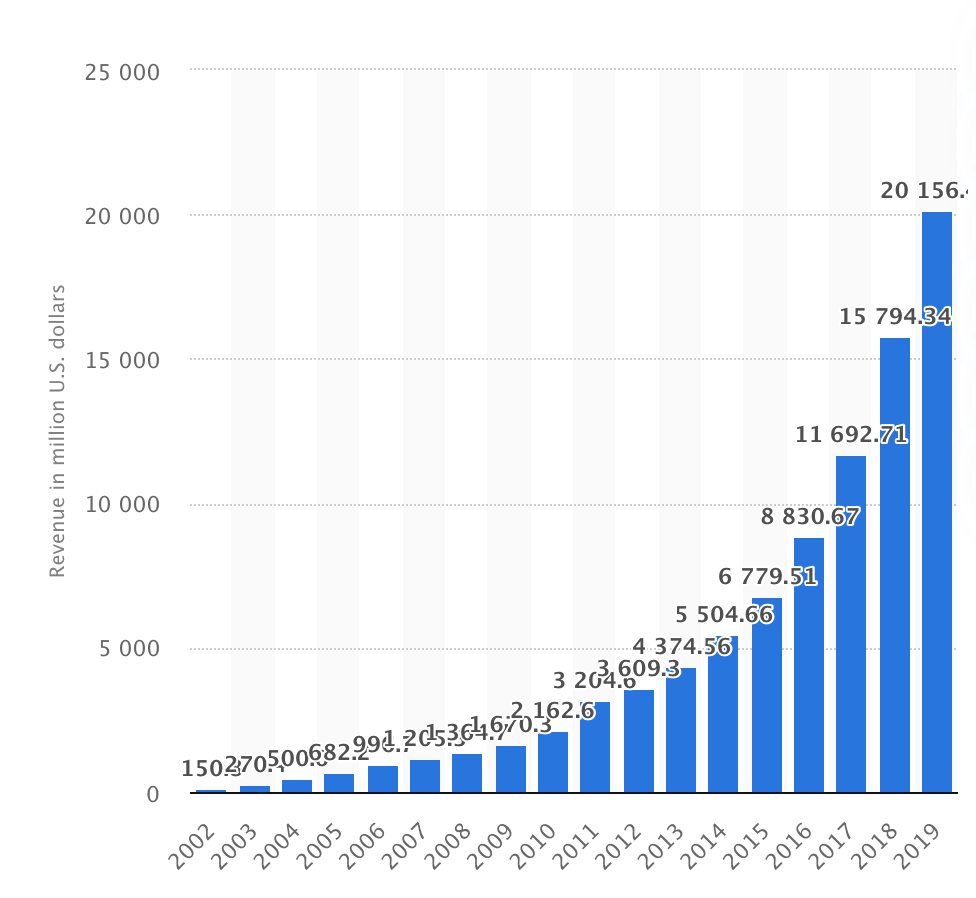
Advances in digital technologies and connectivity offered new opportunities for business model innovation (Bharadwaj, 2013). Netflix Inc. is one company, which through its’ adoption of a digital business model, pioneered a new video streaming on demand (VSOD) service. Netflix, now a household name, boasts an impressive 167 million subscribers worldwide (Statista, 2020). Regarded as the best subscription streaming service, it charges a monthly flat-rate subscription fee for unlimited access to its’ an online entertainment hub, offering simultaneous on-demand streaming for up to four individuals of a selection of television box sets, films and original content to a device of choice (Honorof, 2020).
Revolutionising ‘On Demand’
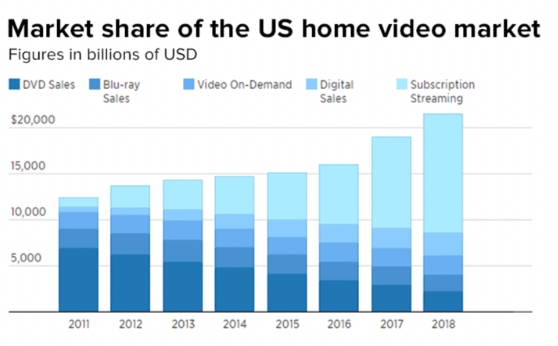
Netflix began in 1999 as a DVD-by-mail subscription service in the United States (U.S.), aiming to disrupt movie-rental services by overcoming inconvenient physical store returns and late fees. The innovative product-as-service worked within a sharing economy, replacing the need to own tangible DVDs and moving away from the take-make-dispose norm of consumerism (Rood & Kishna, 2019). Importantly, the 2000’s saw the rise of digital cable, where broadcasters offered premium channel subscriptions for movies and ‘on demand’ digital DVDs via subscription (Sherman, 2019). Most significantly, the rise of the internet birthing the SVOD industry drastically impacted the popularity of DVD use and purchase (CNCB, 2019). Therefore, although the company had achieved growth with 13.8 million DVD subscribers by the fourth quarter of 2011, had Netflix failed to seize the opportunity to offer a digitalised service, the company’s popularity would have diminished.

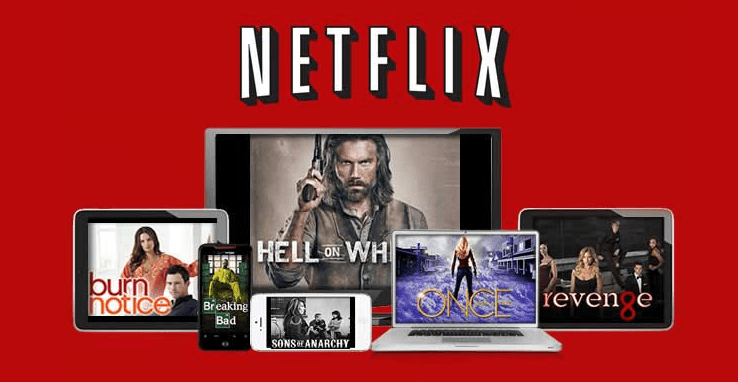
Netflix’s digitalisation in 2007 gave the company control of its value chain, through licensing directly with studios and suffering no additional costs per customer, they created large profits (RedSpider, n.d.). However, their achievement was reliant on the receptiveness of consumers and their preference for convenience which VSOD allowed – bypassing the linear schedules governing TV. Further, technology has allowed the development of their entertainment app, enabling Netflix to be enjoyed on multiple devices simultaneously – offering the ultimate ‘on demand’ experience, with specific device applications even allowing content downloading to enjoy without internet (Netflix, 2020).
Market Development
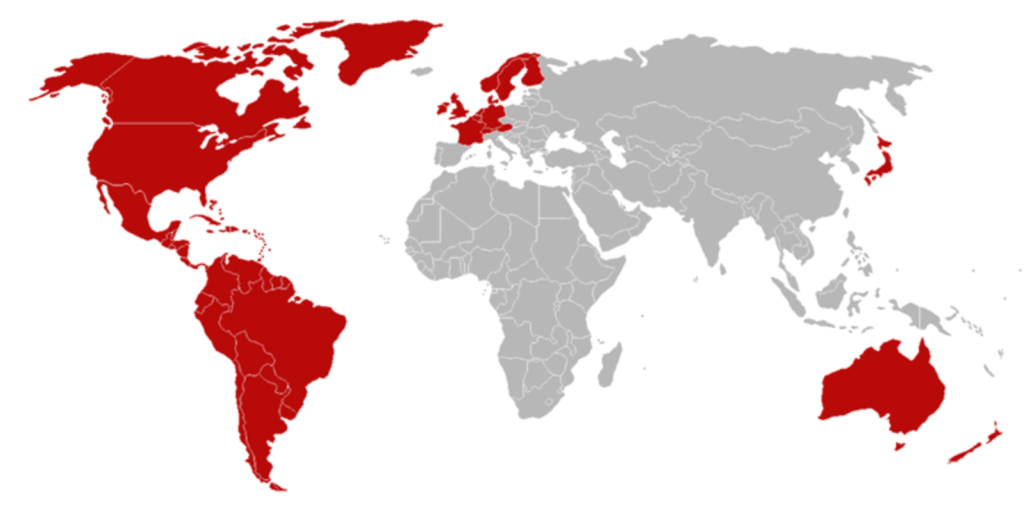
Significantly, digitalisation allowed Netflix to begin a hugely successful and rapid internationalisation strategy in 2011. Without such, their exponential growth would have been unlikely. They expanded into 190 countries worldwide in just seven years, gaining approximately 70 million users outside of the U.S. and upwardly trending (EMarketer, 2018). Entering these new markets was paramount to their growing success in the VSOD industry, with only China, North Korea, Syria and Crimea remaining unconquered, though government restrictions are to blame here (Netflix, n.d.). Importantly, utilising their digital business model, the company was even able to overcome India’s technological challenges (lack of household televisions), by offering a $3.00 mobile-only plan. However, their partnership with Airtel for better market access and tailored regional content aided their ample success with a 700% growth for the fiscal year 2018-2019 (The Economic Times, 2019).
Product Development
However, with the VSOD industry becoming increasingly competitive due to a lack of patented technologies or regulations creating low barriers to entry (Vikash, 2019), and with the digital business models of competitors like Amazon Prime Video, showing only minor differences, and undertaking internationalisation also, the key differentiator between these services is the content they offer. As such, Netflix’s continued success is somewhat attributed to its’ early mover advantage (Lieberman & Montgomery, 1988) which not only allowed the company to gain a large percentage of the market, able to leverage its user base to gain the best licensing deals from studios.
Thus, although 63% of their content is licensed, with increasing prices due to competition and piracy as one of the largest threats to SVOD revenue (Forbes, 2015), it was Netflix’s creation of original content which offered a game-changing strategy, accounting for 37% of Netflix streaming in October 2018 (Sprangler, 2018). It attracted big industry names – offering high pay and according to Shonda Rhimes – creator of hit shows ‘Grey’s Anatomy’ and ‘How to get away with Murder’ who left Disney for Netflix:
“I love the creative freedom there. There are no restrictions.”
Shonda Rhimes (Vox, 2017).
This decision and the company’s initial preference for series reboots and stars ‘past their prime’ for example in their creation of ‘Fuller House’, attracted new audiences and reduced licensing costs, consumer switching and piracy as a substitution (Aversa, Hervas-Drane, Evenou, 2019).
In conclusion, Netflix’s initial success can be attributed to its’ digital business model revolutionising ‘on demand’, as only 4.7% if its 57.4 million U.S. subscribers still utilise its’ DVD rental service (Statista, 2020). However, its continued success, though facilitated through digitalisation, is credited largely to its subsequent market development (internationalisation strategy) and product development (own-content creation strategy), which has allowed Netflix, despite its’ rising competition to remain the frontrunner in the VSOD industry.
Word Count: 798
References
Aversa, P., Hervas-Drane, A., and Evenou, M., (2019). Cass Business School. How the iconic business models of Netflix and Spotify point the way to defeating digital piracy. Retrieved March 01, 2020 from https://www.cass.city.ac.uk/faculties-and-research/research/cass-knowledge/2019/january/how-the-iconic-business-models-of-netflix-and-spotify-point-the-way-to-defeating-digital-piracy
Bharadwaj, A. (2013). MIS Quarterly.Digital business strategy: Toward a next generation of insights.
CNCB. (2019). The death of the DVD: Why sales dropped more than 86% in 13 years. Retrieved March 02, 2020 from https://www.cnbc.com/2019/11/08/the-death-of-the-dvd-why-sales-dropped-more-than-86percent-in-13-years.html
EMarketer. (2018). Top 10 Countries, Ranked by Netflix User Penetration, 2018 (% of digital video viewers). Retrieved March 03, 2020 from https://www.emarketer.com/chart/220373/top-10-countries-ranked-by-netflix-user-penetration-2018-of-digital-video-viewers
Forbes. (2015). Is Piracy A Serious Threat To Netflix? Retrieved March 04, 2020 from https://www.forbes.com/sites/greatspeculations/2015/03/17/is-piracy-a-serious-threat-to-netflix/#5cd3a4237856
Honorof, M., (2020). Tom’s Guide: The best streaming services in 2020. Retrieved March 04, 2020 from https://www.tomsguide.com/uk/us/best-streaming-video-services,review-2625.html
Lieberman, M.B. and Montgomery, D.B. (1988). First‐mover advantages. Strategic. Management (9): 41-58. doi:10.1002/smj.4250090706
Netflix. (n.d.). Where is Netflix available? Retrieved March 05, 2020 from https://help.netflix.com/en/node/14164
Netflix. (2020). How to watch Netflix from any country from any device. Retrieved March 07, 2020 from http://netflix-abroad.com/
RedSpider. (n.d.) Web and Art Design: Netflix Business Model Latest, How does ‘Netflix make money 2019? Retrieved March 04, 2020 from https://www.redspider.ae/blog/netflix-business-model-how-does-netflix-make-money/
Rood, T., & Kishna, M. (2019). Outline of the Circular Economy. 42.
Sherman, A., (2019). CNBC: The future of cable may be no TV at all. As one company from Arizona shows. Retrieved March 04, 2020 from https://www.cnbc.com/2019/03/03/cable-future-may-not-include-tv-as-cable-one-shows.html
Sprangler, T., (2018). Variety: Netflix Original Series Viewing Climbs, but Licensed Content Remains Majority of Total U.S. Streams. Retrieved March 04, 2020 from https://variety.com/2018/digital/news/netflix-original-series-licensed-viewing-friends-the-office-1203085230/
Statista. (2020). Number of Netflix paying streaming subscribers worldwide from 3rd quarter 2011 to 4th quarter 2019 (in millions) [Graph]. In Statista. Retrieved March 05, 2020, from https://www.statista.com/statistics/250934/quarterly-number-of-netflix-streaming-subscribers-worldwide/
The Economic Times (2019). Netflix revenue soared 700% on desi content marketing. Retrieved March 02, 2020 from https://economictimes.indiatimes.com/tech/internet/netflix-revenue-soars-700-on-desi-content-marketing/articleshow/71999990.cms
Vikash, (2019). Medium: Netflix Inc, Competitive Position and Analysis. Retrieved March 03, 2020 from https://medium.com/@vik975/netflix-inc-competitive-position-and-analysis-7ea89a4bb356
 On Claud Nine
An incredibly insightful article Claudia. With Netflix being something I use frequently it was very engaging and it raised points which I had never considered as being integral to its success. I completely agree with you that the future for Netflix competing within the SVOD industry will be based around the creation of its own content, which are now some of its most popular shows. My question is do you think the benefits of buying an Amazon Prime Membership will have a dramatic impact on the success of Netflix in the future? With customers not only getting access to TV shows and movies, free fast shipping, exclusive shopping deals and unlimited reading, would you not agree you get far more from your Amazon Prime subscription (Amazon.com 2020)?
Amazon. (2020). Retrieved from,
https://www.amazon.com/gp/help/customer/display.html?nodeId=201910360
LikeLiked by 1 person
Thank you Edmund, on researching the topic i was made aware of the other benefits of amazon prime video however i feel that due to only a limited number of films and tv shows availiable ‘included with prime’ that their selection of shows is not the threat. Instead however i feel the ability to subscribe to “Hayu” which offers many American TV shows such as the popular ‘Keeping up the Kardashians’ could be key feature that improves its rivallry with Netflix (Amazon Prime, 2020).
Amazon Prime (2020). Hayu. Retrieved fromhttps://www.amazon.co.uk/gp/video/storefront/ref=DVM_PDS_PDS_UK_SB_C_kwd-307930835902_351321161177_1006707_1949157320?filterId=OFFER_FILTER%3DSUBSCRIPTIONS&benefitId=hayu&ref=DVM_PDS_PDS_UK_SB_C_kwd-307930835902_351321161177_1006707_1949157320&benefitID=hayu&node=3010085031
LikeLike
Hi Claudia,
A really interesting post! I think the most interesting business move that Netflix has made is the move towards product development of its own content. Contrary to the way network television works, where the shows that stay on the air (especially in the US), are the ones with high ratings and many directions of plot and content within shows are only written in with ratings in mind, Netflix does indeed embody the sense of ‘freedom’ as you mentioned in the shows it creates and puts up for streaming. Because there is so much to chose from and shows are no longer fighting for a slot on prime time tv, anything goes! Additionally, I am interested to know more about how this structure of tv production has changed to usual ‘go to market’ plan that is usually followed when a new programme is created. Do you think that the relevance of advertising and promoting new shows is as relevant under this type of model?
LikeLike
Thanks for your comment Nicolette! Yes it does seem now that for most people i interact with, at least in my age group that ‘on demand’ is the go to and that this seems to be the business model tv production is transitioning towards. I think it couls be a mixture of advertising on their site but more than this I beleive it is word of mouth advertising which amplifies the success of the shows. It seems for their more popular shows like ‘Stranger Things’ the nation were all talking about it and thus it seemed like an inclusive activity for all to be involved in watching, bringing people together.
LikeLike
Hi Claudia,
I am attracted by your blog topic because I am very interested in Netflix’s original content. Through reading your article, I learned that Netflix resolutely chose to transform into the digital business model when it achieved a huge amount of DVD subscriber growth. It’s not easy for many enterprises to give up the existing huge profits and invest in the R & D of new business. I think that’s why Netflix can achieve the early mover advantage that you mentioned in the VSOD industry.
Although Netflix has become well known and has a large number of subscribers, the competition in this industry is still intensive, because its competitors, such as Amazon Prime Video, have also invested heavily in the development of original content and actively attracted subscribers. Therefore, I think Netflix should make full use of its “early mover advantages”, trying to improve user loyalty and maintain its success.
LikeLiked by 1 person
thank you for your comment Yichi! I completely agree that their early mover advantage and ubiquitous nature has helped them to maintain their market share!
LikeLike
The success of Netflix has been one of my favourite maybe because of the owner starting the company as a competitor to Blockbuster who fined Netflix’ founder Reed Hastings for misplacing a cassette. Netflix has completely changed the way we look at entertainment and their loyal customer base and originally produced shows and movies. Even though there are numerous competitors in this field such as Amazon Prime, Hotstar in India and Apple now too. Netflix have hugely relied on their customer base and immensely popular TV shows including the first self produced series by the company House of Cards. They also revolutionised the way people watch shows, coining a new famous term called binge watching. My question is that do you feel that the future of entertainment lies in services such as Netflix and will we face a decline in the number of people going to cinemas?
LikeLike
Hi Claudia!
I believe Netflix case is particularly relevant to illustrate how companies can be successful by taking advantage of new technologies and by integrating them into their business models to meet customers’ needs.
As you mentioned, the increasing competition faced by Netflix raises many interesting issues, especially regarding the extent to which Netflix current position is due to its first mover advantage.
Actually, Disney is also launching its own streaming platform, Disney+, which will be available in the UK by the end of the month. Many Disney movies which are amongst top viewed movies on Netflix will consequently be removed from the platform. I’m then wondering whether customers will subscribe to both services or will just switch from Netflix to Disney +. What do you think might happen and how Netflix could possibly respond?
You can find out more about Disney+ launch in this article: https://www.telegraph.co.uk/on-demand/0/disney-plus-uk-how-get-watch-movies-tv-app-price-devices/
LikeLike